Similarities Between the Vietnam and Ukraine Wars?
There are important differences, however, similarities show that some things never change...

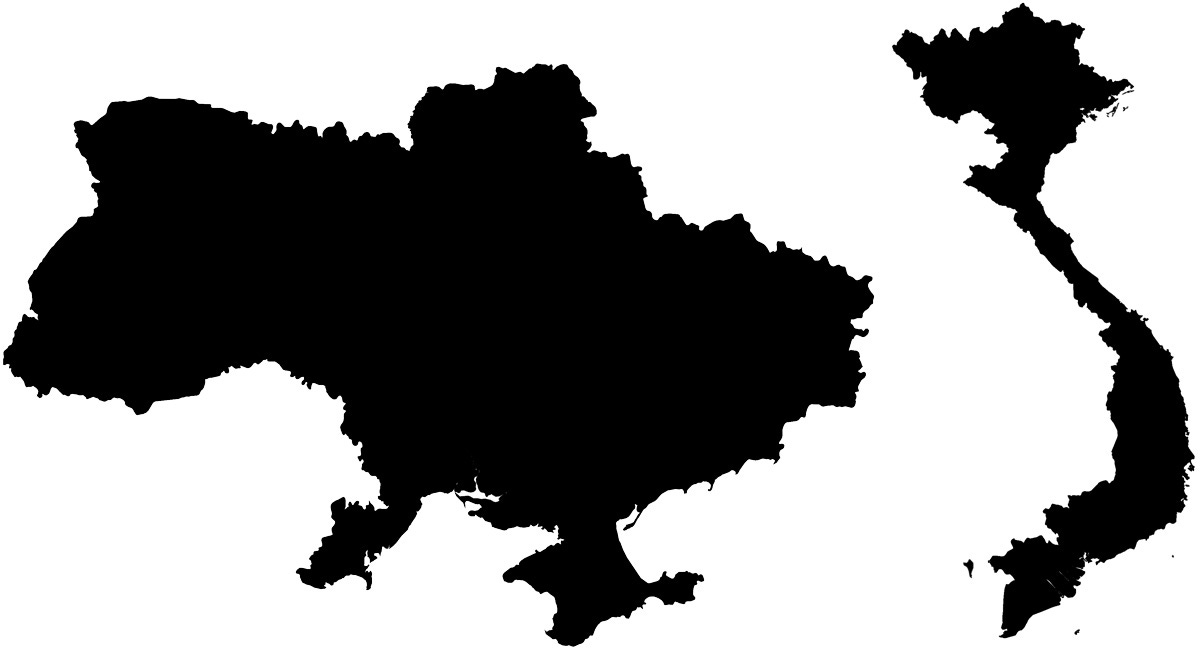
Ok, I know what you’re thinking. I know it because I would also be thinking the same thing if I were you, and stumbled upon this piece about yet another tired comparison to the Vietnam war, like the ones we’ve endured in every conflict since 30 April 1975. Still, if you’re here, then maybe you’re at least a bit curious why somebody would be putting out such a comparison.
Without further ado…
(1) The conflicts are both civil wars and proxy wars fueled by global geopolitical rivalries.
(2) Both wars led to a hardening of global divisions of the involved geopolitical rivals into competing allied blocs. The blocs sought to broaden and harden their alliances, both militarily and economically, and to secure critical resources for themselves and their allies.
(3) Neither of the geopolitical rivals facing off in the wars officially declared war, nor underwent a full mobilization.
(4) Both wars began as a years-long conflict in which none of the powerful external geopolitical rivals' military forces were overtly/directly engaged in battle.
(5) At a certain point in the conflict, one (and only one) of the geopolitical rivals sent military forces to overtly/directly engage in battle. Once that occurred, the option for the other rival to send forces was limited because it would risk escalation to another world war.
(6) The dominant regional geopolitical power in both cases has a long & complex history with the nation at war.
(7) The government in the warring nation is framed by western propaganda as a champion/defender of democracy, contrasted against autocracy/dictatorship of invading forces.
(8) The leader of the non-western-aligned forces previously made overtures to the west, but was rejected. Broken promises and heated propaganda campaigns led to a loss of trust that hardened differences. Diplomatic efforts suffered.
(9) The war carried a strong risk of spill over into adjacent nations, however, it was prevented from spreading into the territories of the dominant geopolitical rivals themselves owing to the possible risk of escalation to a worse (e.g., nuclear) conflict.
(10) US rationale for involvement was underpinned by a "domino theory," that failure to stop their rival would set a precedent, encourage and enable to further geopolitical gains by their rivals.
(11) US support was dominantly financial and material, the human and other costs were taken from the nation at war.
(12) The US public lacked basic historical knowledge about the region, and was heavily propagandized by childish narratives into believing it was a simply fight of good vs evil.
(13) The US government publicly touts successes in their side of war, but leaks reveal that they secretly know the situation is much worse. Revelations show the US policy is strongly colored by ideology, rather than practical military and economic considerations.
(14) US support for the war led to its own critical shortages, such as ammunition. These shortages exerted a feedback on US industry and influenced other geopolitical actions.
(15) Economic impacts of the war put pressure on the global monetary system, requiring emergency responses by central banks to mitigate a broader collapse.
(16) The war was prominently supported by all of the major corporate mass media in the US.
(17) US sent "advisors," aided in the training of allied military forces, and became heavily involved in covert actions inside the warring nation.
(18) US rivals resorted to an attritional strategy whose persistent pressures erode US public support over time, betting that US rivals are more willing/capable of enduring hardships.
(19) One of the geopolitical rivals is dominated by the US, the other major rival involves Russia. Certain narratives and framing of their historical geopolitical rivalry are recycled on both sides.
...I invite your comments below…what do you think? Do you have any other suggestions for similarities? Objections? Please share..
.